Africa's Agricultural Processing Equipment Platform
Cashew Processors Face Mounting Pressure to Upgrade for Higher-Value Product Lines
The Numbers That Matter
This story reports a measured change such as 95%. Figures like this show direction and scale, so it helps to keep them separate from the surrounding commentary.
- Change / rate: 95% When combined with humidification, these systems achieve removal rates above 95% for the thin testa layer.
Operational Shifts Prompted by Global Buyer Demands
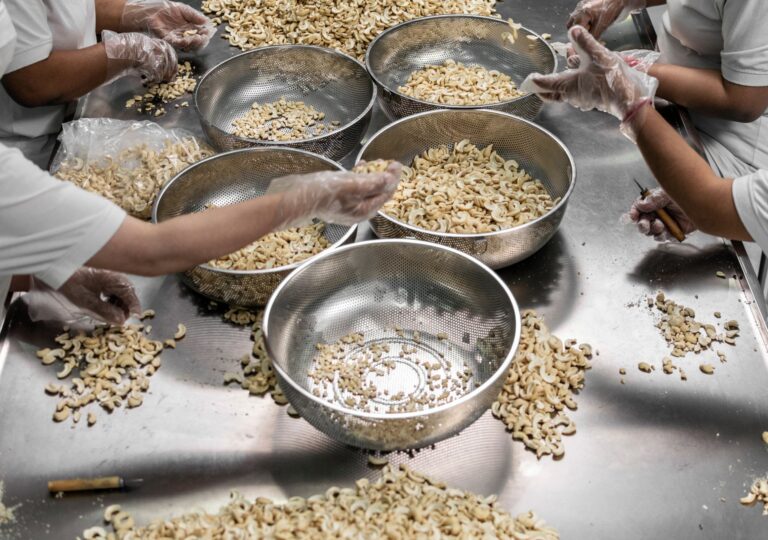
Processing plants across Vietnam, the world’s leading cashew kernel exporter, are adjusting production strategies. International food brands and retailers are gradually shifting orders away from basic raw kernel shipments toward semi-finished and consumer-ready goods. This trend has forced factory managers to reconsider their equipment portfolios. Many lines that were designed solely for peeling, grading, and bulk packing are being augmented with advanced sorting, roasting, and packaging machinery. The operational impact includes higher upfront capital expenditure and more rigorous quality control protocols.
For example, a typical plant that previously relied on manual visual sorting now installs automated Cashew Color Sorting Machine units. These optical sorters remove defective kernels at speeds that manual stations cannot match, ensuring that the final product meets the stringent specifications of European and North American supermarkets. Similarly, the adoption of Cashew Kernel Grading Machine technology has become essential to consistently separate kernels by size, a requirement for premium wholesale contracts.
The Pressure to Move Up the Value Chain
Vietnam imports a large volume of raw cashew nuts from Africa and processes them into kernels for re-export. Historically, the industry has focused on high-volume, low-margin raw kernel trading. However, a combination of competition from African processing hubs, rising domestic labor costs, and consumer market trends is compelling a strategic pivot. Retail chains now demand traceability, organic certification, and attractive packaging—features that command higher unit prices but require investment beyond simple shelling and drying.
The transition is not trivial. It involves integrating cleaning, size grading, hot air drying, testa removal, and secondary sorting into a seamless flow. A modern line often starts with an Automatic Cashew Nut Shelling Machine that reduces kernel breakage during the initial cracking stage, preserving the whole kernel count that determines the highest commercial grades.
Key Processing Stages Under Modernization
Upgrading the value chain touches nearly every step of the cashew kernel production line:
- Grading: Precise size classification using mechanical graders or laser-vision systems ensures uniform batches. This directly influences the sale price, as whole kernels graded as W180 or W240 fetch premiums.
- Drying and Conditioning: Industrial dryers with controlled humidity cycles stabilize the kernel’s moisture content, preventing spoilage and improving peeling efficiency. Some processors now use multi-zone dryers that can handle varying throughput without manual adjustment.
- Peeling: Upgraded air-type peeling machines reduce the labor burden and minimize damage to the delicate kernel surface. When combined with humidification, these systems achieve removal rates above 95% for the thin testa layer.
- Sorting and Inspection: After peeling, color sorters and X-ray inspection systems detect internal defects and foreign material. These technologies satisfy HACCP and BRC food safety standards demanded by export markets.
- Packaging: Automated weighing and vacuum-sealing lines extend shelf life and allow direct retail presentation, cutting out the need for repacking by importers.
Implications for Small and Medium Processors
While large integrated factories have the capital to deploy comprehensive automation, smaller units face difficult choices. The cost of a single high-end color sorter can exceed the total annual revenue of a micro-processing unit. Some cooperatives are forming cluster-based shared facilities, where a central processing hub invests in advanced machinery and offers toll-processing services to member factories. This model preserves employment in rural areas while enabling access to high-value export channels.
Government trade promotion agencies are beginning to support this shift through subsidized training and technology fairs. However, industry insiders caution that without coordinated investment in cold storage and logistics, the benefits of upgraded processing may be eroded by post-harvest losses upstream.
Market Repercussions and Trade Dynamics
The move up the value chain could reshape global cashew trade flows. If Vietnam’s processors succeed in capturing a larger share of roasted and flavored kernel markets, African producers may lose a key customer for raw nuts, potentially depressing farmgate prices in countries like Ivory Coast and Tanzania. Conversely, it could accelerate the establishment of processing capacity in Africa itself, supported by development finance institutions aiming to keep added value at origin.
For equipment suppliers, the shift represents a window of opportunity. Manufacturers of specialized cashew machinery are seeing increased inquiries for complete processing lines rather than individual standalone machines. This suggests that the industry is moving toward a more integrated, end-to-end approach to kernel production.
In the near term, processing margins will be squeezed as firms absorb capital costs while competing on price. Yet those that successfully transition to higher-value output stand to benefit from more stable contract terms and reduced exposure to volatile raw commodity prices.
Why This Matters
The push to move up the cashew value chain highlights a pivotal moment for Vietnam’s processing industry, which must balance capital investment against margin pressures. Success could secure higher profit retention and market stability, while failure risks losing ground to emerging African processors.
Sources
FAQ
Is "raw cashew kernel" - Google News the only source for this raw cashew kernel story?
"raw cashew kernel" - Google News is the outlet attached to this item, but it should not be the only reference for an important development. Comparing it with other independent reports gives a fuller and more reliable picture.
What are the key figures in this raw cashew kernel story?
The article cites figures such as 95%. Numbers like these convey the scale and direction of what happened; for the exact amount and the context around it, the original report is the reference.
What does the reported change in this raw cashew kernel story mean?
A percentage or rate of change shows direction and momentum, but its meaning depends on the baseline and period being measured. The original report explains what the figure is compared against.
What is this raw cashew kernel story about?
It summarises a recent development in raw cashew kernel, drawing on the original reporting. The key facts — who is involved, what changed and any figures or dates attached — are highlighted so the story is quick to grasp.
Why does this raw cashew kernel development matter?
The significance lies in what it signals: a notable figure, a decision, or a shift that affects the people, places or organisations named. Those are the points worth following as the story continues.
How current is this raw cashew kernel information?
This article was published on June 29, 2026. News changes quickly, so use it as a starting point and check the named source for later corrections, revised figures or follow-up reporting.